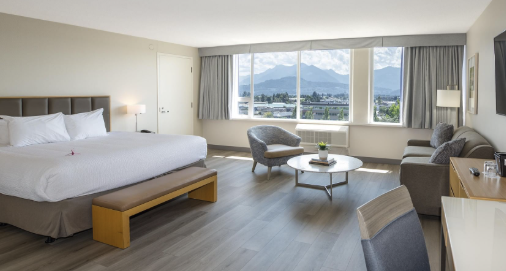
Hotel Stays for Group Trips Across the US and Canada
Hotel Stays for Group Trips Across the US and Canada
Planning fatigue usually shows up before anyone arrives. Messages multiply. Details repeat. Agreement feels provisional rather than settled. By the time a group reaches the stay, energy has already been spent coordinating expectations that never fully aligned.
The assumption is that once everyone is in the same place, friction will ease. A hotel stay appears structured enough to absorb differences—rooms assigned, schedules implied, boundaries in place. That assumption is comforting, especially after long coordination threads.
What follows is rarely dramatic. The stay works. People rest. Yet small points of friction appear, not because anything failed, but because group travel amplifies nuance.
What Group Friction Looks Like Inside a Stay
Group friction is not conflict. It is misalignment expressed through timing, space, and routine. Different arrival rhythms. Uneven energy levels. Varying tolerance for noise, pace, and togetherness.
In the US and Canada, group trips often involve long distances and mixed travel modes. Fatigue arrives unevenly. The stay becomes a convergence point for different states of mind. Some people want to settle immediately. Others want to extend the day. The stay does not decide between them; it holds the tension.
Because hotels are designed for individual use within shared structures, groups experience them differently. Private space is fragmented. Common space becomes contested, even when no one intends it to be.
Decision Factors That Emerge After the Decision
Although this article avoids instruction, decision factors still surface after the decision to travel together is made. These factors do not change outcomes; they shape how outcomes feel.
One factor is coordination residue—the mental load carried from planning into the stay. Decisions may be finalized, but fatigue remains. Another factor is routine collision. Individual habits overlap more frequently in group settings, creating micro-adjustments that repeat throughout the stay.
These dynamics parallel broader context discussed in hotel stay experiences in the united states, where environment shapes routine quietly. With groups, the environment interacts with multiple routines at once, increasing friction without increasing urgency.
As the stay continues, these factors become familiar rather than disruptive.
Scenario-Based Patterns Across the US and Canada
Short group trips compress friction. Everyone moves quickly. Shared schedules dominate. Differences are noticed but often deferred. Over longer trips, patterns settle in.
Road-based group travel introduces repeated arrivals and departures. Each stop resets expectations. Some people adjust faster than others. The stay becomes a place to recalibrate rather than rest.
Urban group trips add density. Movement requires coordination. Quiet becomes scarce. In contrast, highway or rural stops distribute space differently, shifting friction toward timing rather than proximity. These contrasts echo observations in why hotel stays vary across the us, uk, and europe, where geography reframes routine through repetition.
Cross-border group travel between the US and Canada adds another layer. Border transitions, time shifts, and subtle cultural differences influence how the stay is experienced, even when accommodations feel familiar.
Practical Observations Without Direction
As nights pass, groups adjust without naming the process. Informal rules emerge. People stagger schedules. Some withdraw more often. Others take on coordination roles by default.
The stay becomes a shared condition rather than a shared focus. Friction does not disappear; it becomes predictable. This predictability reduces its impact. What felt noticeable on the first night becomes background texture by the third.
Similar patterns appear in reflections like hotel stay experiences shaped by destination context, where environment frames interaction rather than directing it. In group travel, that framing applies to relationships as much as routine.
When Planning Fatigue Turns Into Adaptation
Eventually, planning fatigue gives way to lived rhythm. The group stops revisiting decisions. Attention shifts to movement, conversation, and rest. The stay supports these moments without resolving the differences that shaped them.
By this point, the stay is no longer evaluated. It is inhabited. Adjustments happen earlier in the day. Friction surfaces less sharply because it is anticipated.
A Neutral Closing Reflection
Hotel stays for group trips across the US and Canada reveal how coordination stress transforms into group friction—and then into adaptation. The stay does not eliminate differences. It contains them long enough for routine to settle.
By the end of the trip, most groups remember moments rather than adjustments. The stay fades into the background as a shared environment that held complexity without demanding resolution.
The next group trip will begin with similar assumptions. And once again, the stay will quietly shape how planning fatigue becomes lived experience, one small adjustment at a time.